
You can help your baby sleep without holding them by building a calm, consistent bedtime routine, putting them down drowsy but awake, creating a soothing sleep environment (dark room, white noise, comfy temperature), and using gentle in-cot reassurance (pat/shush, hand on chest). Progress is gradual; most families see improvement in 1–2 weeks with calm, consistent steps.
If your baby loves falling asleep in your arms, you’re not alone. It’s warm, safe, and familiar just like the womb. Still, constant holding can leave you exhausted. The good news: with patience and a gentle approach, babies can learn to settle in their own sleep space without leaving them to cry it out.
Why Do Babies Prefer Sleeping in Your Arms?
Warmth & Comfort. Your body heat, scent, and heartbeat are soothing cues from day one.
Motion & Security. Rocking and walking mimic the gentle movement they felt before birth; stillness can feel new and strange.
Sleep Associations. If your baby always falls asleep while being held, that pattern becomes the cue they expect at every wake-up. Changing the cue gently and slowly changes the sleep pattern.
When to Start Independent Sleep (Gently)
There’s no single “right” age. Many families begin between 3–6 months, when sleep cycles mature and babies can learn to settle with support. If your baby is older, it’s still okay go gradually and keep it positive.
Step-by-Step: How to Help Your Baby Sleep Without Holding Them
1) Build a Consistent Bedtime Routine (10–20 minutes)
A predictable routine lowers stimulation and signals “sleep time”.
Sample routine:
- Warm bath or gentle wash
- Fresh nappy/diaper and pyjamas
- Feeding (keep lights low)
- Short story or quiet lullaby
- Gentle cuddle
- Into the cot/crib drowsy but awake
Keeping the same steps, same order builds emotional safety and makes the transition smoother.
2) Put Your Baby Down Drowsy, Not Asleep
This is the heart of independent sleep. If a baby falls asleep in your arms but wakes in the cot, they may cry for the missing “cue” (your hold). Placing them down sleepy but not fully asleep teaches them to drift off where they’ll wake.
Pro tip: Watch early sleepy signs, yawns, eye rubbing, glazed look, slower movements and start the routine then to avoid overtiredness.
3) Create a Comforting Sleep Environment
Make the cot/crib feel calm and safe.
- White noise: Mimics womb sounds and masks household noise.
- Darkness: Use blackout curtains to boost melatonin and reduce distraction.
- Temperature: Aim for 20–22°C (68–72°F); choose breathable sleepwear.
- Swaddle or Wearable Blanket: Swaddle only if the baby is not rolling (typically under 3–4 months); switch to a wearable blanket once rolling begins.
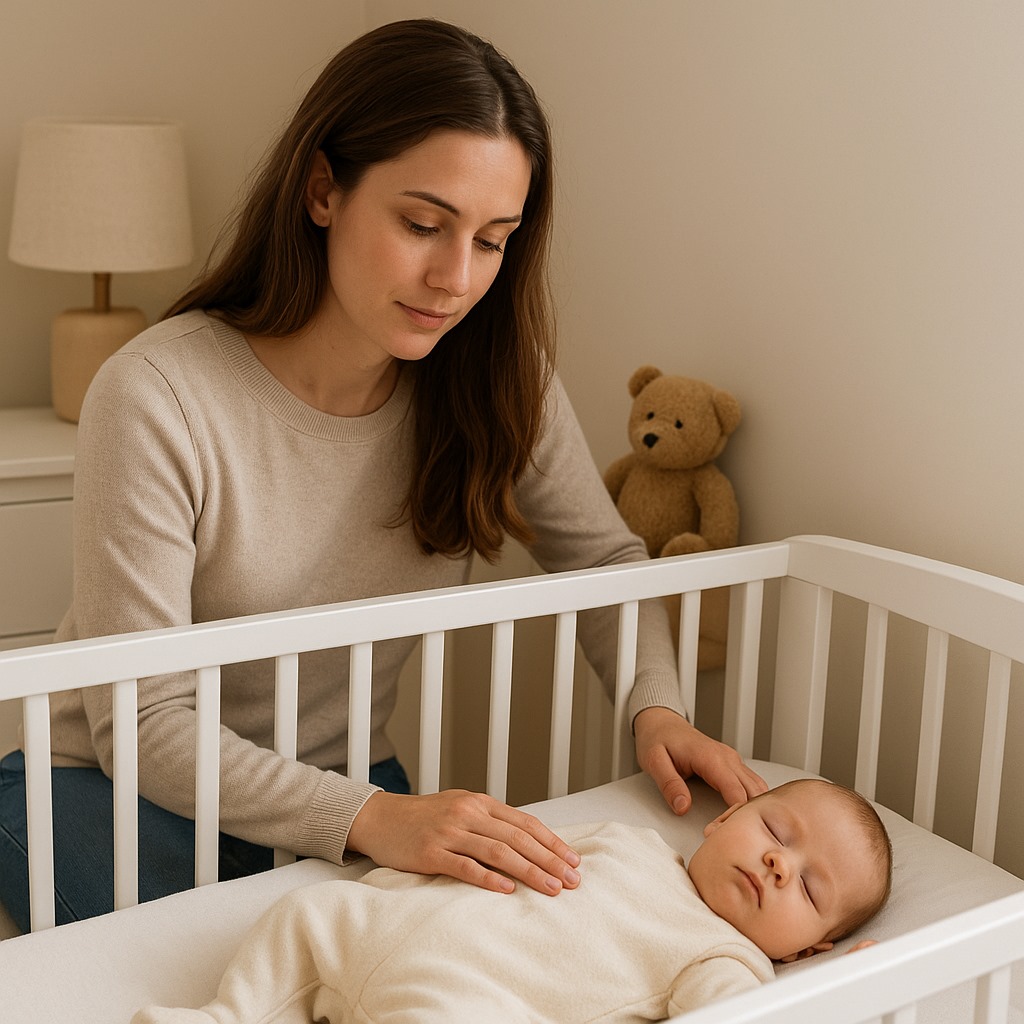
4) Offer Gentle In-Cot Reassurance (Before Picking Up)
If baby fusses after you put them down, try soothing in the cot first:
- Hand on chest/belly for steady reassurance
- Pat/shush rhythmically for 30–60 seconds
- Soft humming or a few quiet, repeated phrases (“You’re safe, time to rest”)
This teaches that the cot/crib is safe and that you’re still nearby.
5) Fade the Holding Time Gradually
Change the habit slowly to keep it stress-free.
- Night 1–2: Hold until very drowsy → put down.
- Night 3–4: Hold until somewhat drowsy → put down; finish settling with pat/shush.
- Night 5–6: Short cuddle only → down drowsy; reassure in cot as needed.
- Night 7+: Place down earlier in drowsiness; keep responses calm and brief.
You can also try the gentle “chair method”: sit next to the cot for a few nights, offering touch/voice; then move the chair a little further away every couple of nights.
6) Protect Daytime Sleep (So Nights Go Better)
Well-timed naps prevent overtiredness (which makes settling harder).
General awake-time guide:
- 0–3 months: 45–90 minutes
- 3–6 months: 1.5–2.5 hours
- 6–9 months: 2.5–3 hours
- 9–12 months: 3–4 hours
These are ranges, not rules watch your baby’s cues and adjust.
7) Separate Feeding from Sleep (Gently)
If your baby always feeds to sleep, try moving the feed earlier in the routine (feed → story → cuddle → bed). This tiny shift reduces the feed-to-sleep link without a big battle.
8) Build a “Responsive Settling Ladder”
Use the least stimulation that helps. If one step works, stop there:
- Pause 60–90 seconds (many babies resettle).
- Soft shush/voice from beside the cot.
- Hand on chest; gentle pat.
- Pick up briefly to calm → return to cot drowsy.
- Repeat as needed, keeping lights low and movements slow.
Consistency matters more than perfection. If one bedtime goes off plan, simply return to the ladder next time.
Gentle Ways to Soothe Without Holding
- Mini wind-down before naps: 3–5 minutes of dim lights and quiet set the tone.
- White noise all sleep long: Low, consistent volume helps many babies.
- Pacifier/dummy (if age-appropriate): Sucking can be calming without constant holding.
- Familiar scents: Some parents sleep with the cot sheet for a night to transfer scent.
- Same sleep space: Consistency builds comfort and confidence.
Common Mistakes to Avoid
- Starting too late: Overtired babies struggle more; start at the first sleepy cues.
- Too many changes at once: Tweak one thing every few nights.
- Bright lights/phone checks: Keep screens and overhead lights off during wake-ups.
- Long play during night feeds: Keep nights quiet, boring, and brief.
Track Progress with a Simple Sleep Log
Write down nap times, feeds, bedtimes, wake-ups, and what worked. Patterns pop out quickly like a late afternoon nap pushing bedtime too late or a missed burp causing multiple wakes.
How Long Will This Take?
With calm consistency, many families notice progress in 3–5 nights, with bigger improvements by 1–2 weeks. Some babies take longer that’s okay. Your steady presence is the most powerful sleep cue of all.
FAQs
How do I stop my baby from needing to be held to sleep?
Start with a soothing routine, put down drowsy but awake, and use in-cot reassurance. Fade the holding time a little every few nights.
Why does my baby only sleep when I hold them?
Because holding has become a sleep association, warmth, motion, and scent signal “sleep”. You can replace that cue with a calm routine, dark room, and gentle pat/shush.
Is it okay to let my baby cry when trying to sleep alone?
Many parents prefer responsive, gentle approaches. Always rule out hunger/discomfort, then offer calm reassurance. You don’t have to use “cry it out” to make progress.
What’s the best age to stop rocking to sleep?
Lots of babies manage without rocking between 3–6 months, but there’s no deadline. Go at your pace.
How long until my baby adjusts to sleeping without being held?
Often 1–2 weeks with consistent routines and gentle settling. Some babies take longer to stay patient and supportive.
Final Thoughts
Helping your baby sleep without being held is a process, not a test. Keep nights simple, quiet, and predictable. Guide gently, celebrate small wins, and trust your instincts. Your calm presence teaches your baby that their cot/crib is safe and better nights will come.